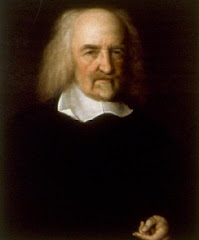
In De Cive, Hobbes says that drunkenness and cruelty are violations of natural law; “For I cannot see what drunkenness or cruelty (which is vengeance without regard to a future good) contribute to any man’s peace or preservation” (III.27n). I’ve always wondered about this passage. First, does anyone have any thoughts on what might be behind the drunkenness constraint? It seems plausible to say that in the state of nature, being drunk would only increase one’s vulnerability. But this doesn’t seem like enough to motivate an absolute prohibition on drunkenness. In Leviathan, Hobbes compares the actions of drunk men to the actions of madmen (8.23). So perhaps he is merely saying that he cannot imagine a situation in which acting like a madman could be conducive to a person’s preservation. Second and more importantly, given that the right of nature is the right to anything one judges conducive to one’s self-preservation, does that mean that the famous “right to all things” doesn’t include the right to be drunk or cruel?
Sunday, July 27, 2008

Monday, June 16, 2008
Women and lesser animals
It seems that Hobbes accords some fairly robust natural equality to women on the ground that they are sufficiently equal in strength and wit to men that arrangements between the sexes will have to be consensual. He says that dominion over children, in the absence of any express contract, resides in the mother because only she can declare who the father is. (Doesn't this seem like a terrible argument?) But he allows that non-human animals may permissibly, under the law of nature, be used (if they are tameable and useful) or killed (if they are noxious), not on Humean grounds that they are too weak to merit considerations of justice, but (it seems) on the ground that they would be unfairly advantaged if we were morally required to refrain from killing them while they were given moral impunity to kill us. Does this position make any sense?
Saturday, May 17, 2008
Must commonwealths be able to defend themselves?
Hobbes seems to define a commonwealth as an entity of sufficient size and strength to deter would-be attackers. In an age of nuclear weapons and suicide bombers, can commonwealths or nations serve the function Hobbes assigned them?
Sunday, April 27, 2008
Hobbes on human nature
Would you characterize Hobbes's view of human nature as pessimistic, or merely realistic? Although he seems to adopt something like the later Bentham's "predominant egoism", he also acknowledges humans' tendency to form "transcendent interests", interests in the service of which they are willing to risk death , or embrace death. If the goal of political philosophy is to display, as Rawls insisted, a realistic utopia, can Hobbes's conception of human nature be a building block in anyb realistic utopia?
Could a system of divided and limited government count as a Hobbesian sovereign?
Certainly. Hobbes offers a functional definition of a sovereign as an authoritiative public judgment to resolve all disputes and enforce those decisions. Experience proves that a mixed and tempered system may serve that function. Even so, we should keep in mind that the American experiment had not lasted 100 years before it imploded into civil war. Was Hobbes right that these mixed systems are less stable?
Tuesday, April 1, 2008
Lessons from a Materialist Thinker

“This is an intensively philosophical book that speaks importantly to issues in the philosophy of mind, of action, and of responsibility. The author is fully conversant with Cartesian and post-Cartesian anti-materialism and has a refined and complex understanding of the Hobbesean alternative to it. As the term "lessons" indicates, Frost aims to help us escape from Cartesian ways of thinking and to move us to a sense of ourselves and one another as material, embodied beings who can and should relate to one another in sinuous but mutually productive ways." —Richard Flathman, The Johns Hopkins University
View this book.
Hobbesian Moral and Political Theory

Both conflict and cooperation are ubiquitous features of human social life. Interests of individuals conflict with those of their neighbors because (among other reasons) material resources are scarce, ideals and values are diverse, and people care about their reputations and relative standing among their fellows. At the same time, individuals share a number of common interests and concerns, and this makes social cooperation possible. Among the most important of these common interests are the prevention and limitation of violent conflict and the protection of personal possessions. When these interests are secured and when environmental and economic conditions are reasonably favorable, people generally can live out their lives and engage in cooperative (and competitive) social activities without constant concern for their own survival and that of their loved ones. But it is not easy to secure persons and possessions when others may gain by attacking the former or seizing the latter. In fact, it requires two major social institutions--morality and government--working in a coordinated fashion to do so. This is one of the main themes of Hobbes's philosophy that will be developed in this book. -- Gregory S. Kavka
View this book.
Subscribe to:
Posts (Atom)